How Driveway Restoration Protects Your Investment in Landscaping
Homeowners often devote significant time and resources to landscaping. From carefully selected plantings to hardscaped walkways and decorative borders, outdoor improvements are meant to enhance curb appeal and property value. However, when a driveway begins to crack, settle, or deteriorate, many assume that full replacement is the only option. What is often overlooked is how demolition and re-pouring can disrupt surrounding landscaping and create unnecessary expense.
At Rite-Wash, we focus on concrete driveway restoration solutions such as crack repair, expansion joint replacement, driveway wash and seal, and concrete lifting. These methods allow homeowners in Williamsburg and the Hampton Roads region to protect their landscaping investment(s) while preserving and restoring the structural integrity of their driveway.

The Impact of Full Replacement on Landscaping
Replacing a driveway is a huge undertaking and involves breaking up existing concrete, hauling away debris, and preparing the subgrade for a new pour. Heavy machinery is often required. During this process, nearby grass, shrubs, flower beds, irrigation systems, and decorative edging may be damaged.
Even if contractors attempt to minimize disruption, demolition work inherently affects surrounding soil. Compaction, displacement, and vibration can stress plant roots and disturb carefully designed layouts. After the new driveway is installed, homeowners may find themselves facing additional costs to restore lawns and landscaping that were unintentionally affected. Choosing restoration over replacement reduces this risk.

Addressing Cracks Without Tearing Everything Out
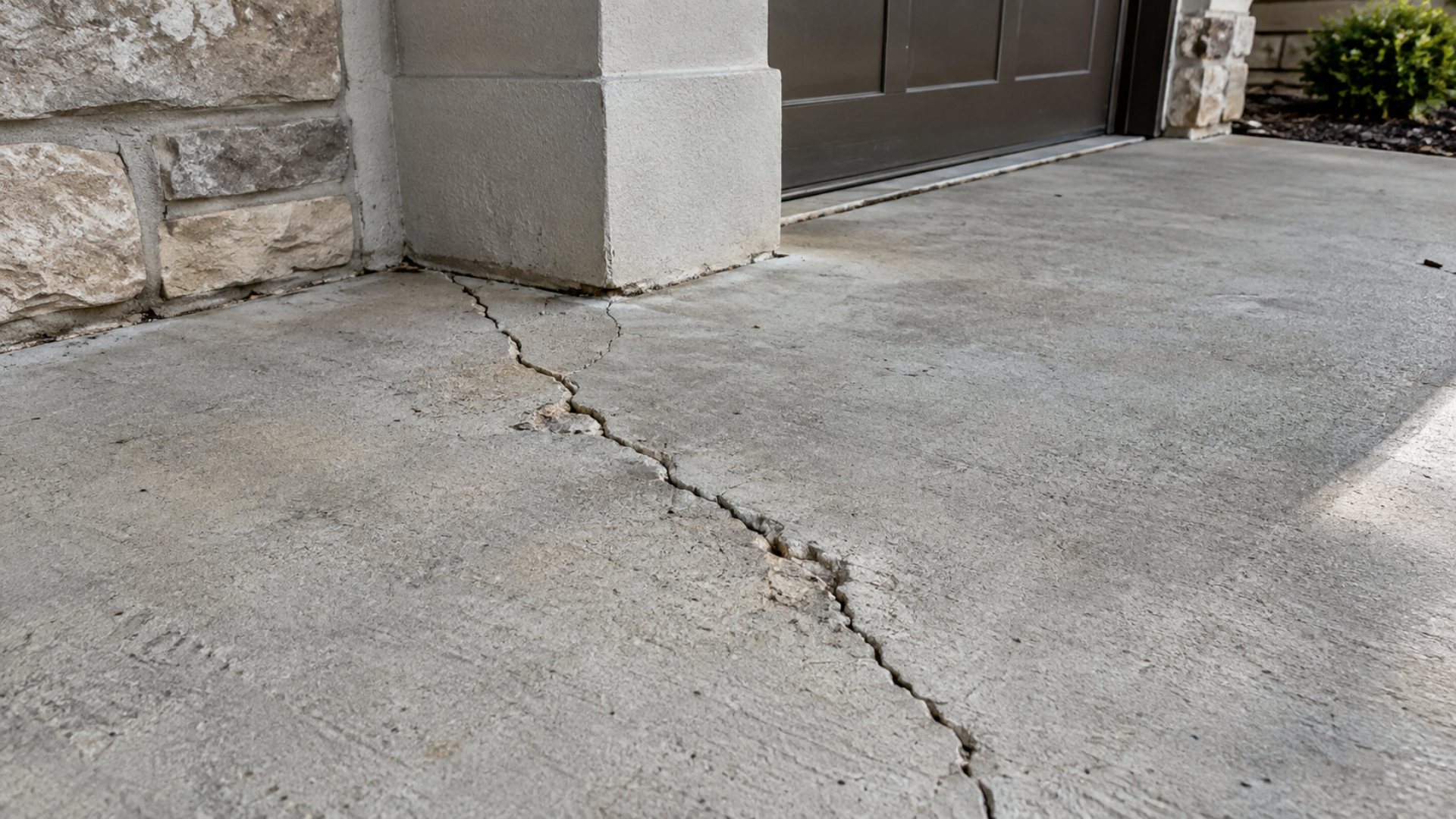
Concrete cracks do not automatically mean the driveway has failed. In many cases, professional crack repair can restore both appearance and structural function. Sealing and reinforcing cracks prevents water infiltration, which is one of the primary causes of further deterioration.
By addressing cracks early, homeowners can extend the lifespan of their existing driveway without disturbing adjacent landscaping. Restoration focuses on preserving what is already working rather than starting from scratch.
Expansion Joint Replacement Matters
Expansion joints play an important role in allowing concrete to expand and contract with temperature changes. Over time, these joints can deteriorate or fail. This can contribute to shifting and cracking. Replacing worn expansion joints is a targeted repair that helps stabilize the driveway without invasive demolition. Maintaining proper joint integrity protects both the concrete and the surrounding soil, reducing the likelihood of uneven settlement that might otherwise affect nearby hardscapes or planting beds.

Concrete Lifting as a Non-Destructive Solution
In coastal Virginia, soil movement and moisture fluctuations can cause sections of a driveway to sink or become uneven. Concrete lifting offers a practical alternative to removal. By carefully raising settled slabs back to their proper level, lifting restores functionality and safety without dismantling the entire surface.
This approach avoids the heavy equipment and excavation associated with replacement. Landscaping that borders the driveway remains largely undisturbed, and the overall project timeline is typically shorter and less disruptive.

Preserving Curb Appeal
A well-maintained driveway enhances curb appeal just as much as a manicured lawn or vibrant flower beds. Driveway wash and seal services further complement restoration efforts by removing organic matter such as green and black algae, mildew, dust, dirt, and pollen. Adding a protective coating to your driveway will help preserve the concrete from deterioration and promote cleanliness.
The combination of concrete repair, professional cleaning, and sealing can transform an aging driveway into a refreshed surface that complements the rest of the property. This cohesive appearance protects the value of previous landscaping investments.

A Practical and Cost-Conscious Approach
Even a newly poured driveway is not immune to cracking. Full replacement does not eliminate the natural forces that affect concrete over time. Restoration provides a cost-effective method of addressing current issues while preserving surrounding improvements.
For homeowners who have invested in landscaping design, irrigation systems, and decorative features, minimizing disruption is often a priority. Concrete restoration allows necessary repairs to be completed without undoing years of careful outdoor planning.
Protect What You Have Built
Your driveway and your landscaping work together to define your home’s exterior. When cracks or settlement appear, it is important to explore options that solve the problem without creating new ones.
At Rite-Wash, we specialize in concrete crack repair, expansion joint replacement, and concrete lifting designed to restore your driveway while protecting the surrounding property. By choosing restoration instead of replacement when appropriate, homeowners can preserve curb appeal, safeguard landscaping, and extend the life of their existing concrete for years to come.