Why Existing Concrete Is Often Worth Saving
When concrete begins to crack, settle, spall, or develop surface damage, replacement can seem like the obvious solution.
But removing and replacing an entire slab is not always necessary.
In many cases, a significant portion of the concrete may still be structurally sound. If the underlying problem can be identified and the damaged areas can be restored properly, repair may extend the useful life of the existing surface while avoiding the disruption and expense of full replacement.
For property owners, the key is determining how much of the concrete has actually failed and whether restoration can address the cause of the deterioration.
Surface Damage Does Not Always Mean Total Failure
Concrete can look rough without being beyond repair.
Spalling, chipped edges, isolated cracks, worn joints, and surface deterioration may affect only specific areas of a slab.
If the underlying concrete remains stable, those damaged sections may be candidates for restoration.
Replacing an entire slab because of localized deterioration can mean removing large amounts of concrete that are still performing as intended.
A condition assessment can help separate cosmetic and repairable damage from problems that indicate more widespread failure.
Cracks Can Often Be Managed
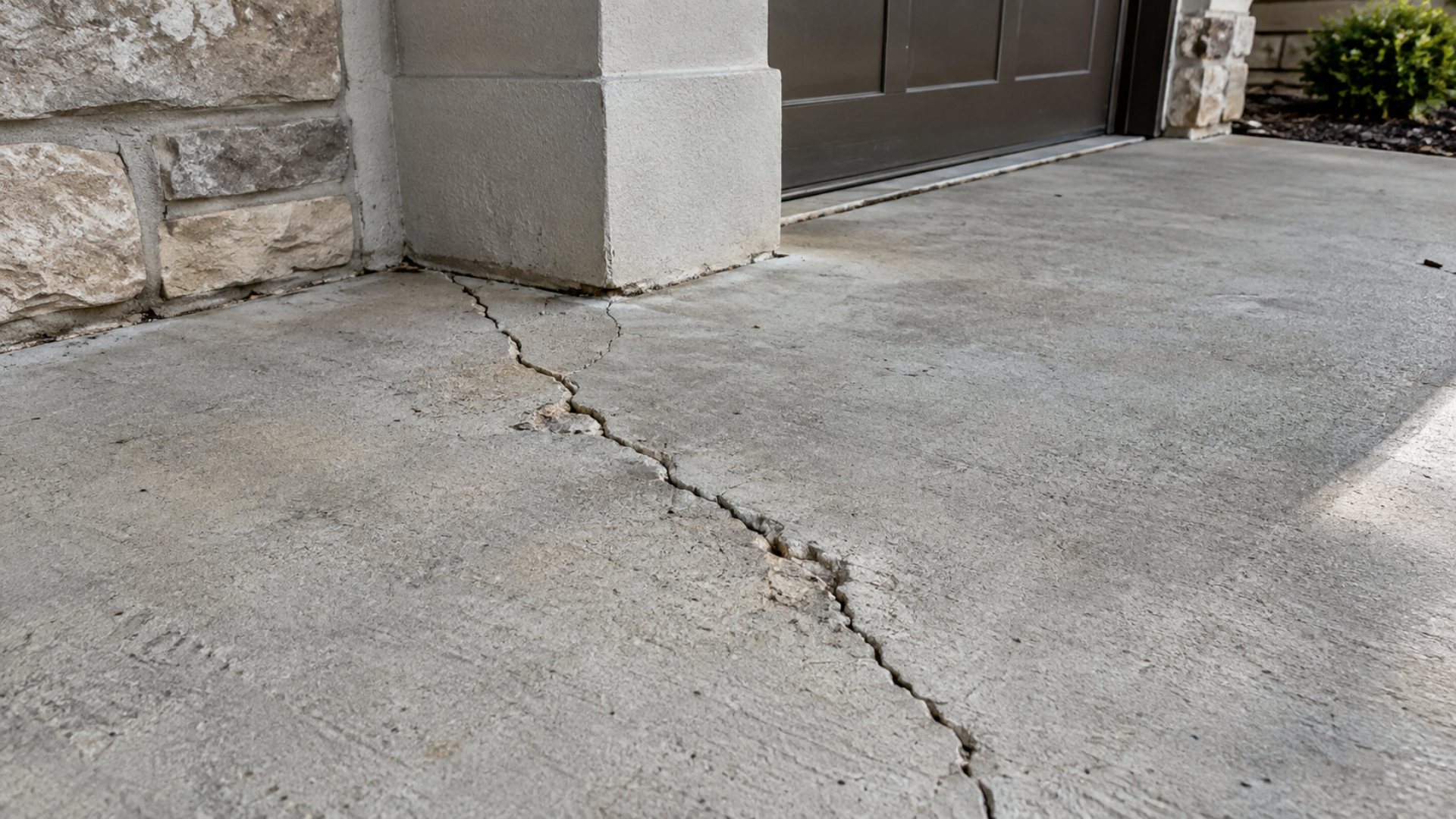
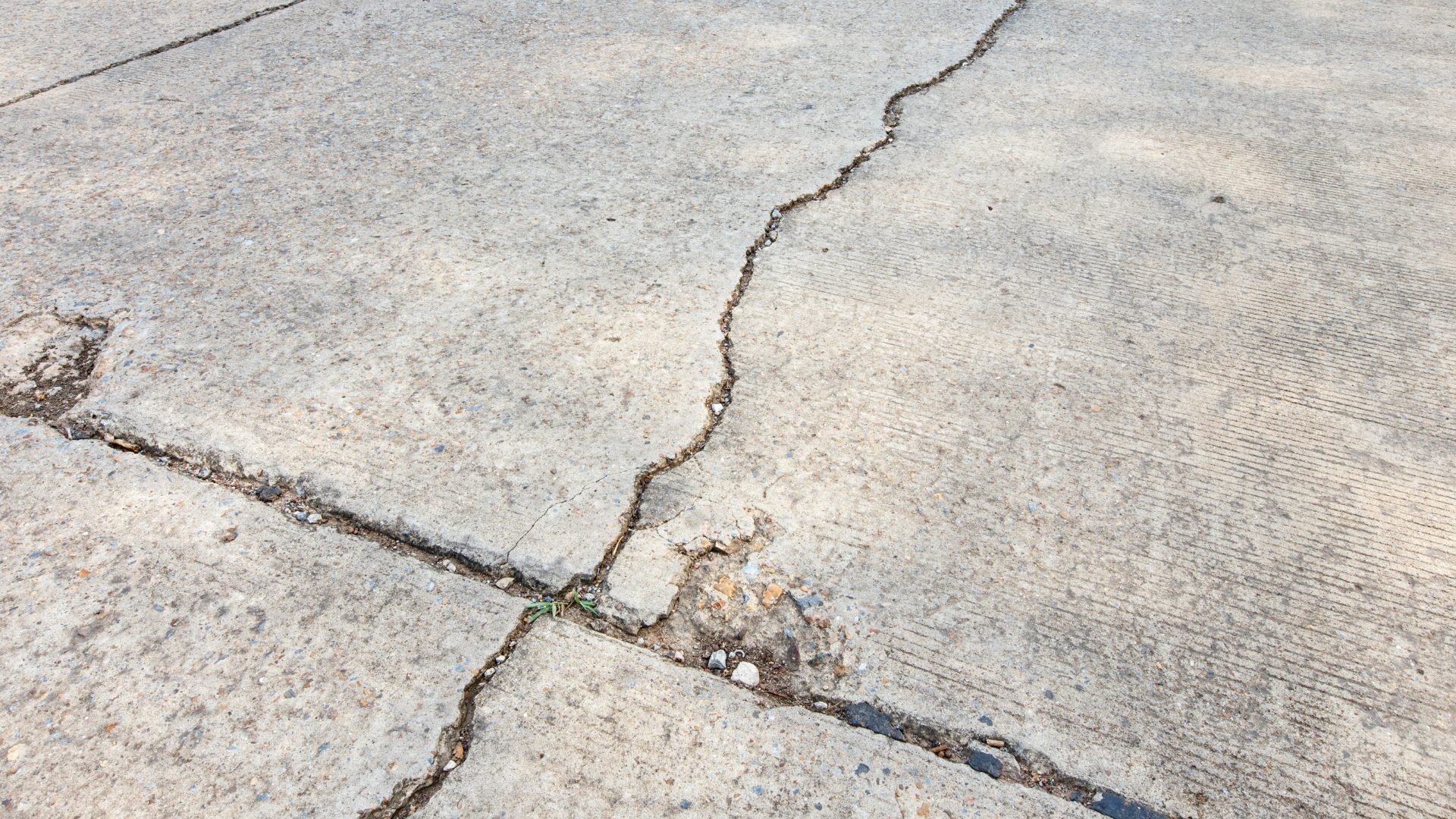
Cracking is common in concrete, but not every crack has the same meaning.
Some cracks develop from normal shrinkage or temperature movement. Others can be related to settlement, water intrusion, failed joints, or changes beneath the slab.
The important question is not simply whether a crack exists.
It is why the crack formed and whether movement is continuing.
When the cause is understood, appropriate crack remediation may help protect surrounding concrete and slow further deterioration.
Spalled Areas May Be Repairable
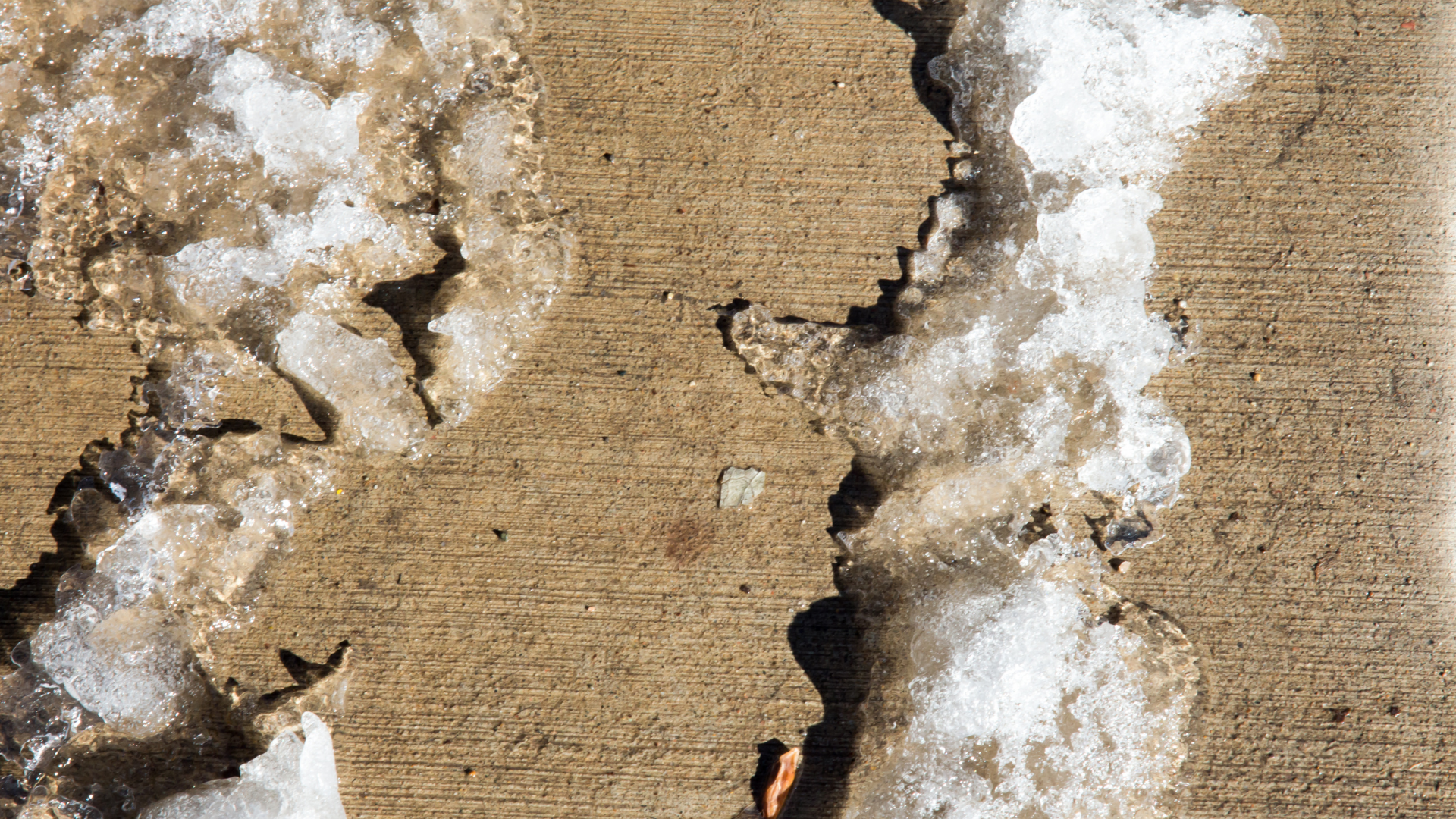
Spalling occurs when portions of the concrete surface begin to flake, chip, or break away.
Moisture, freeze-thaw cycles, corrosion, deicing salts, impact, and other conditions can all contribute.
Even when the surface looks badly deteriorated, the damage may not extend through the full depth of the slab.
Removing loose material and rebuilding affected areas with compatible repair materials can sometimes restore the surface without replacing the entire section.
The depth and cause of the spalling should be evaluated first.
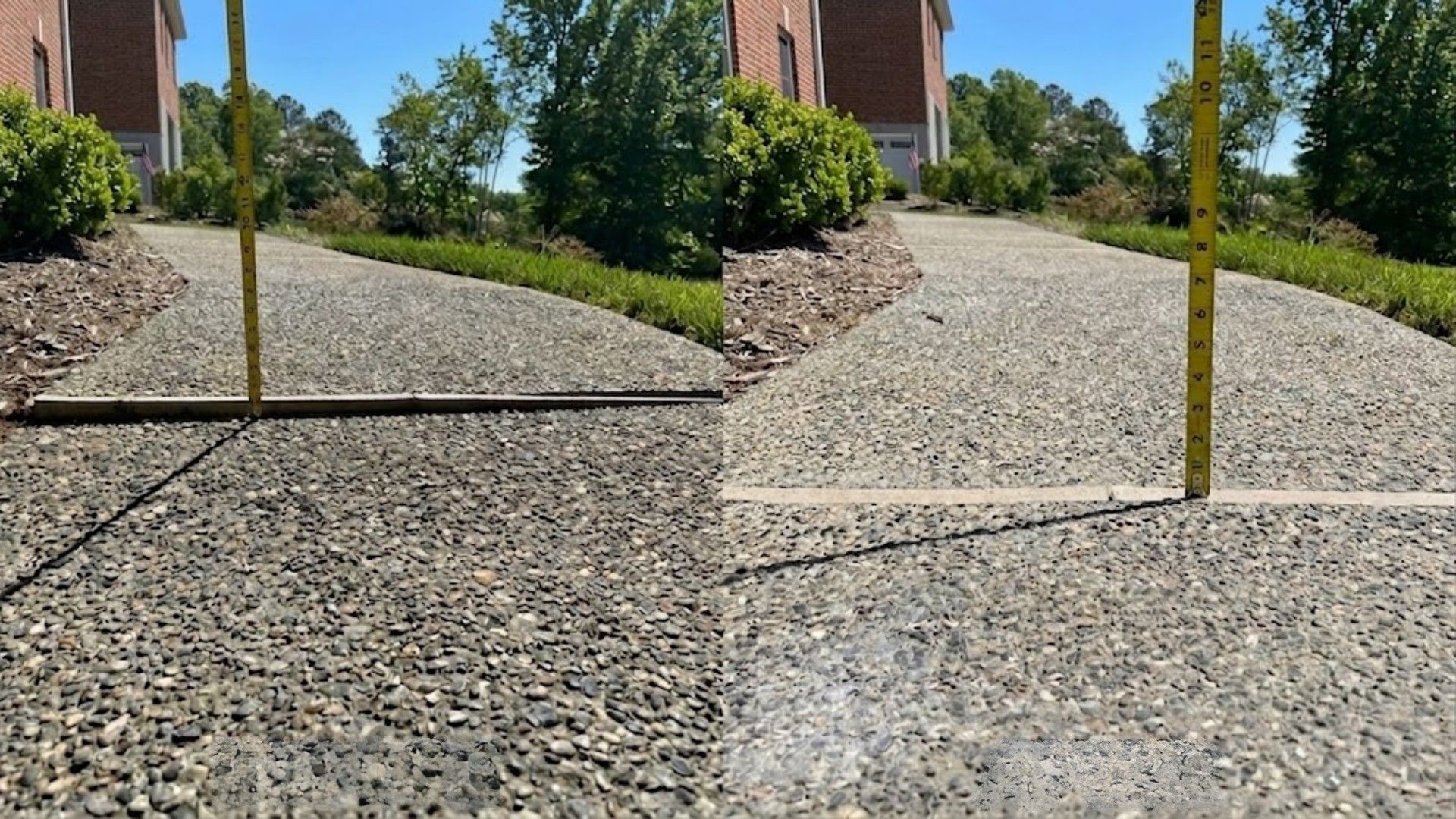
Settlement Does Not Always Require a New Slab
Sunken or uneven concrete may result from voids, soil movement, erosion, or poor drainage beneath the slab.
If the concrete itself is still in usable condition, leveling may be an alternative to demolition and replacement.
Raising the existing slab can help restore a more even surface while preserving the original concrete.
However, the source of settlement should also be considered.
If water continues washing soil away beneath the slab, correcting the height without addressing drainage may allow the problem to return.
Existing Concrete Has Already Proven Itself
Older concrete has one advantage that newly placed concrete does not: its behavior is already visible.
Property owners can see where movement has occurred, where drainage problems exist, and which areas have remained stable over time.
That information can help guide a targeted restoration plan.
Instead of starting over, contractors may be able to preserve the sound sections and focus resources on the areas that actually need work.
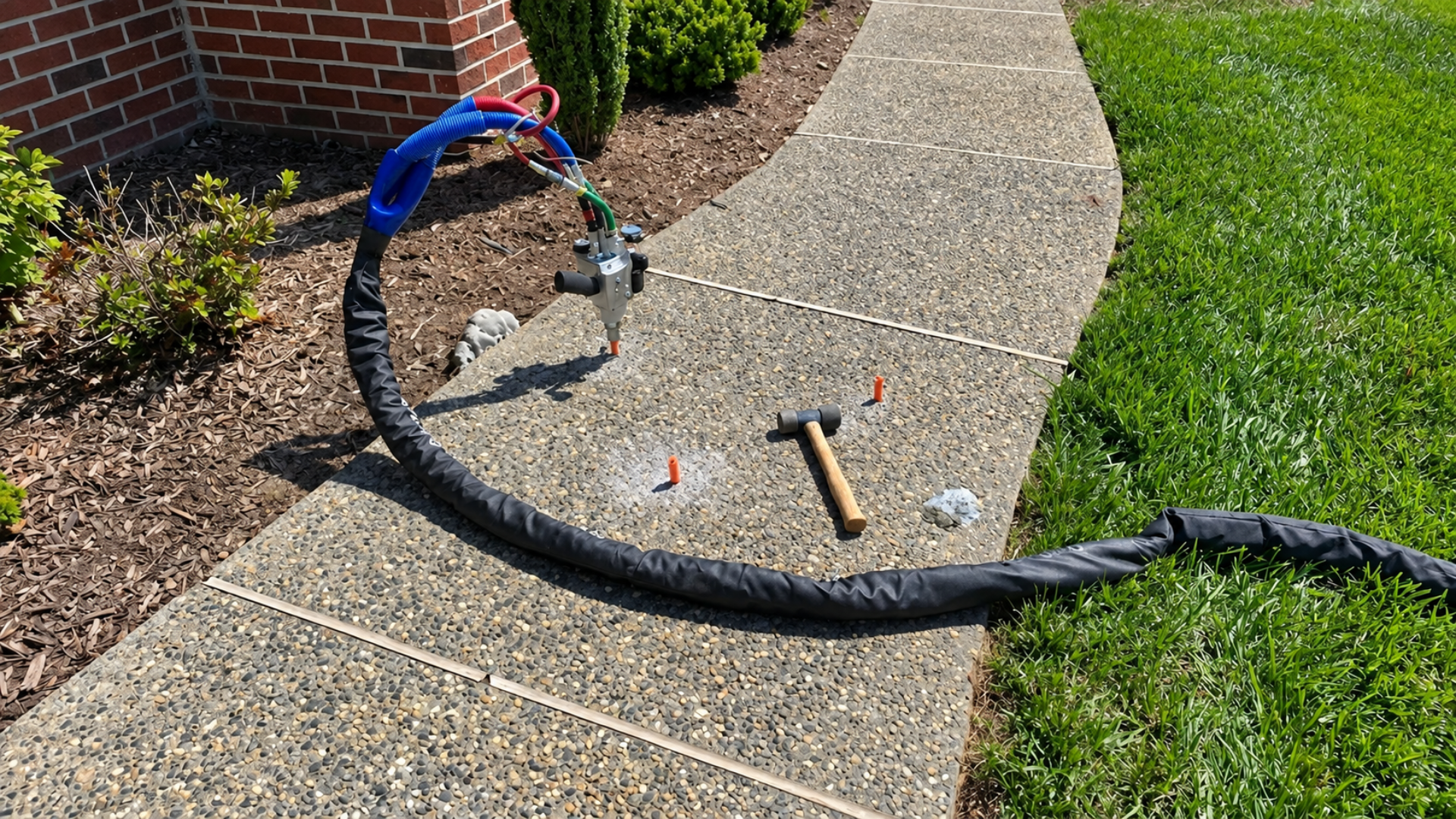
Restoration Can Reduce Disruption
Full concrete replacement can involve demolition, debris removal, forming, pouring, curing, and restricted access while the new concrete gains strength.
For commercial and industrial properties, that interruption can affect walkways, loading areas, workspaces, or daily operations.
Targeted restoration may allow work to be completed in smaller sections and with less disruption, depending on the condition of the slab and required repair.
That can be particularly valuable in facilities where downtime matters.
The Cause Still Needs to Be Corrected
Restoration works best when it addresses more than the visible damage.
A repaired crack may reopen if settlement continues. New patch material may deteriorate if water keeps entering the same area. Restored edges may fail again if damaged joints are left untreated.
Drainage, movement, joint condition, moisture, and underlying support should all be considered.
Repairing the cause helps give the restoration a better chance of lasting.

Preserve Sound Concrete Whenever Practical
Damaged concrete does not automatically belong in a dumpster.
Many slabs contain large areas of sound material that may continue performing for years when damaged sections are repaired and underlying problems are addressed.
Rite-Wash specializes in concrete restoration, including crack remediation, spalling repair, expansion joint repair, and concrete leveling.
If your concrete is showing deterioration, contact Rite-Wash for an evaluation. A restoration-focused approach can help determine whether the existing concrete can be preserved instead of replacing more than necessary.